Regional B2B Website Front-End Build with Next.js
Lead-gen site for the Singapore regional office of an engineering and construction group. Designed it, then built the front end in Next.js and Tailwind and wired it to Sanity CMS. Four languages, gated lead capture.
- When
- Sept 2026
- Type
- Websites
- Tools
- Link
- briam.vercel.app ↗
Stack: Next.js, Tailwind CSS, Sanity CMS
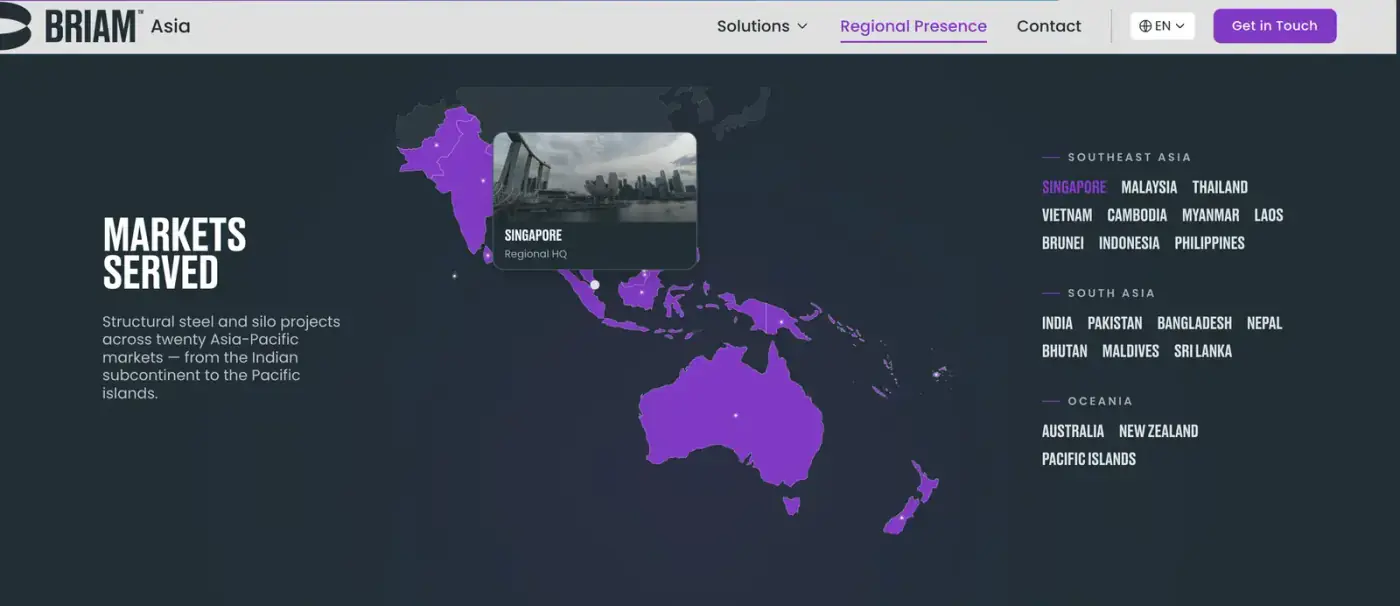
The Brief
BRIAM Asia is the Singapore regional sales office for BRIAM Group, an international engineering and construction group in bulk solids handling and industrial building. Contracted as designer, scope expanded to component-level front-end build and wiring the front end to Sanity CMS.
The site needed to do one job well: turn engineering managers and procurement leads across Southeast Asia into qualified leads, across two very different solution streams.
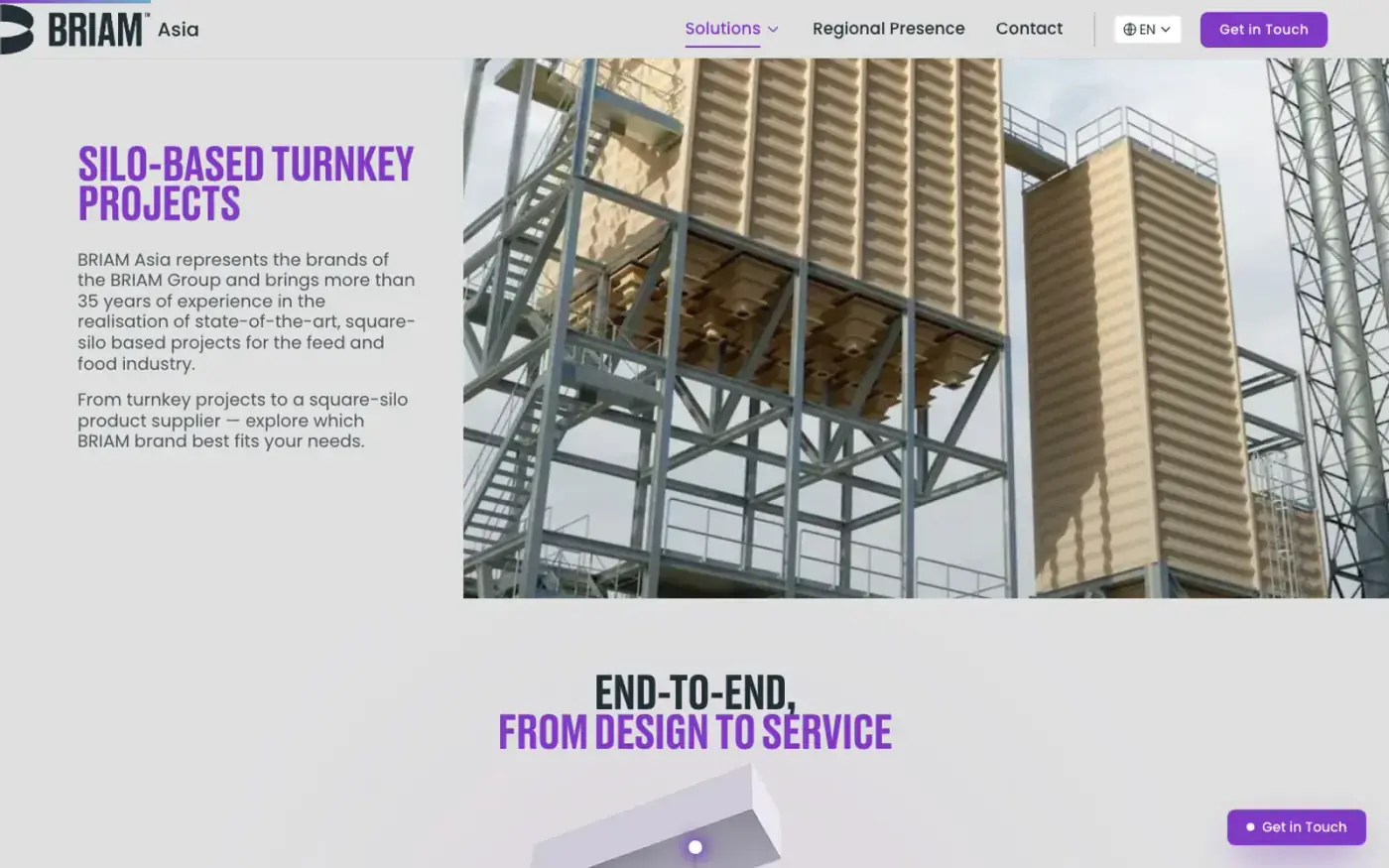
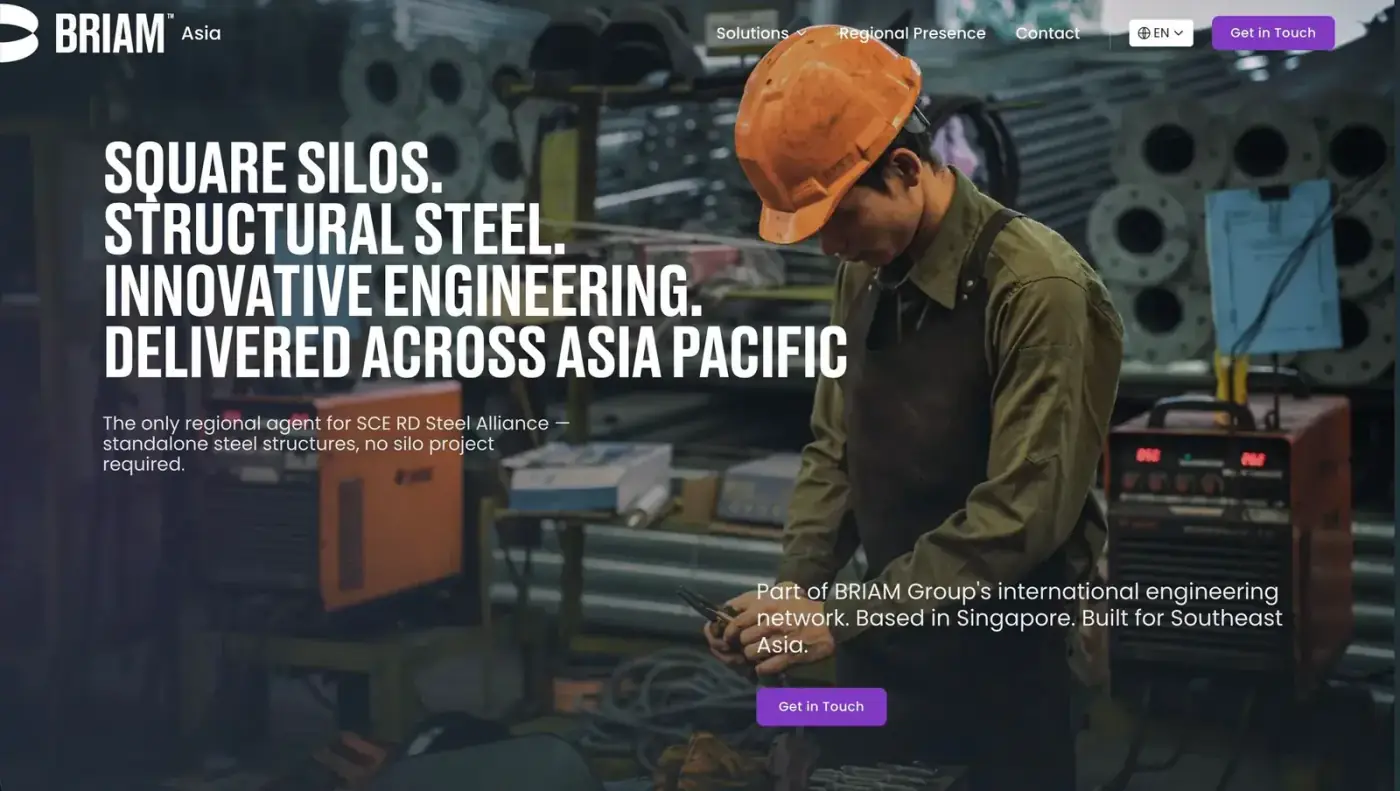
The Problem
-
Two solution streams, two different jobs: silo-based turnkey projects (mature, well-documented elsewhere) vs. standalone steel structures (BRIAM Asia’s exclusive regional play)
-
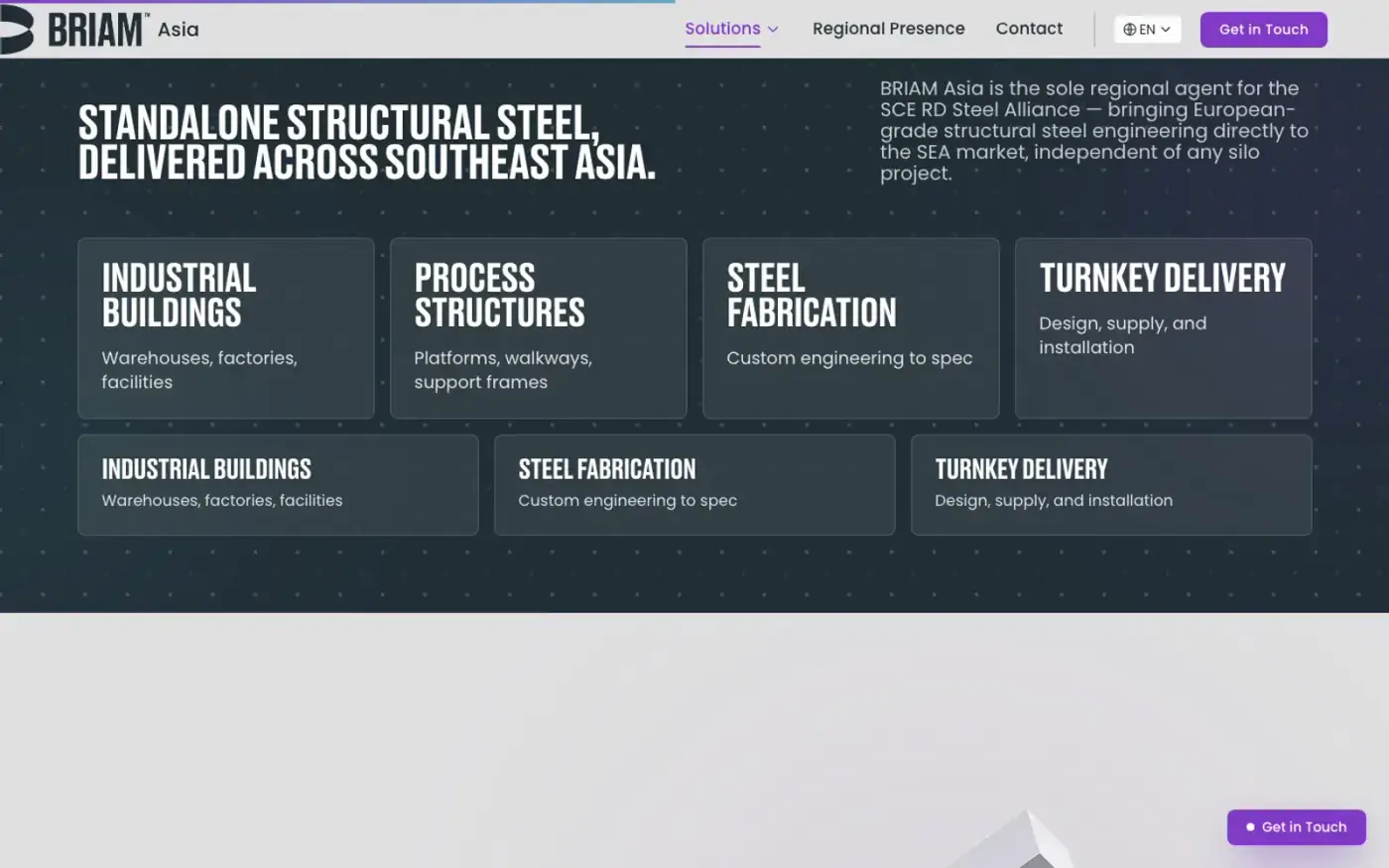
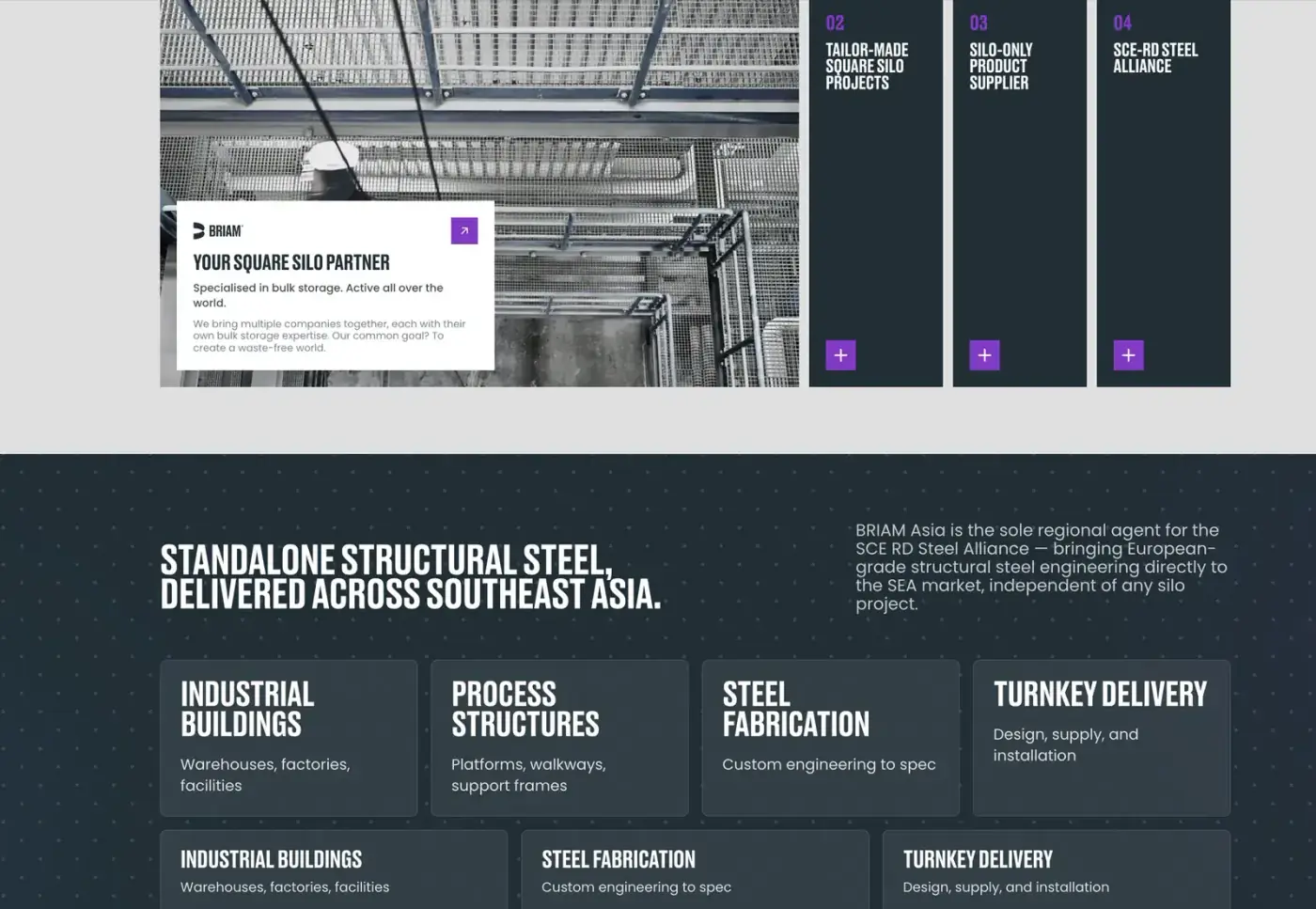
The steel structure stream; sole regional agent for the SCE RD Steel Alliance, is the actual commercial differentiator, but it’s the newer, less understood offering
-
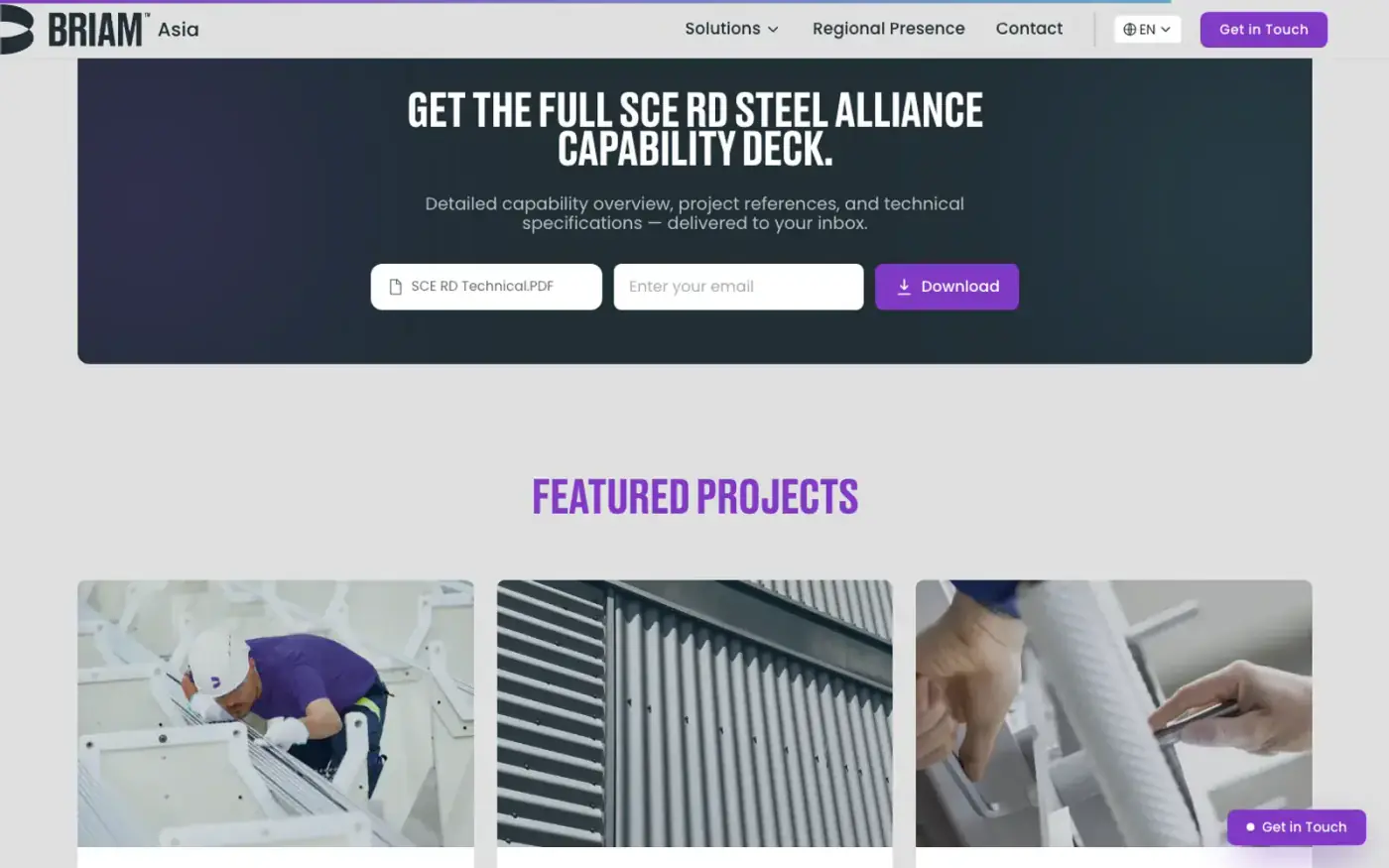
Site needed to gate technical documentation behind lead capture without feeling like a wall
-
Four languages, one page, no separate routes
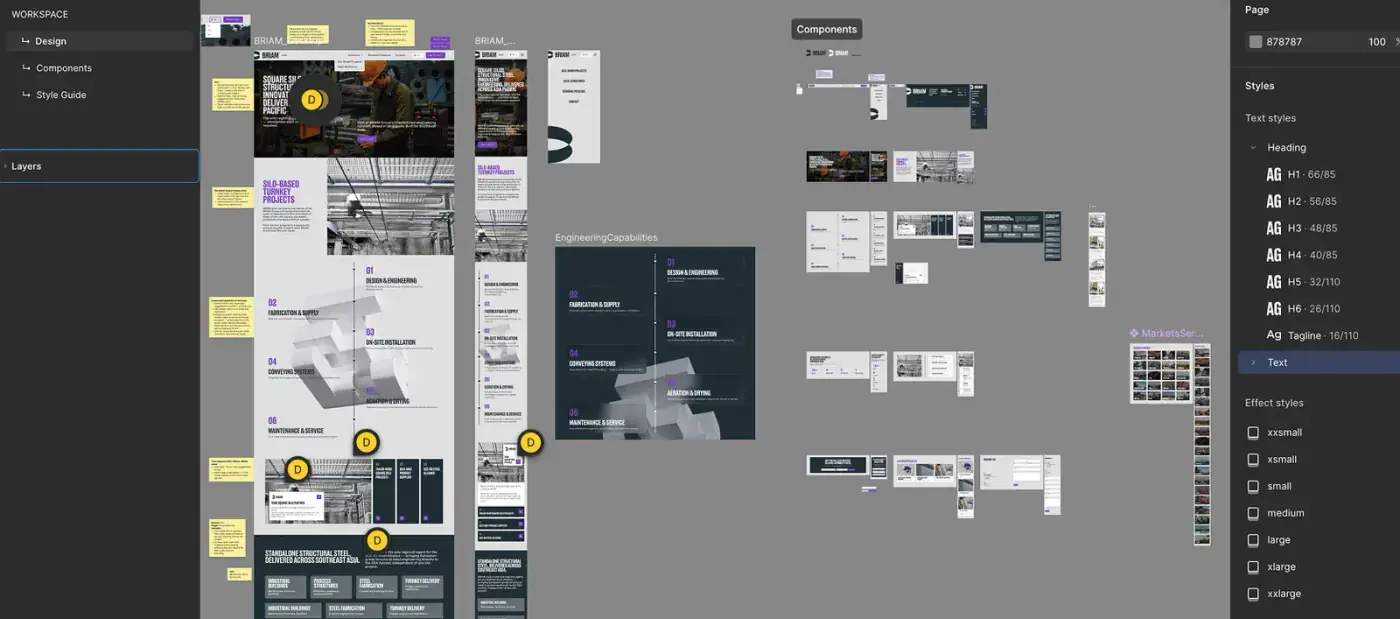
The Approach
-
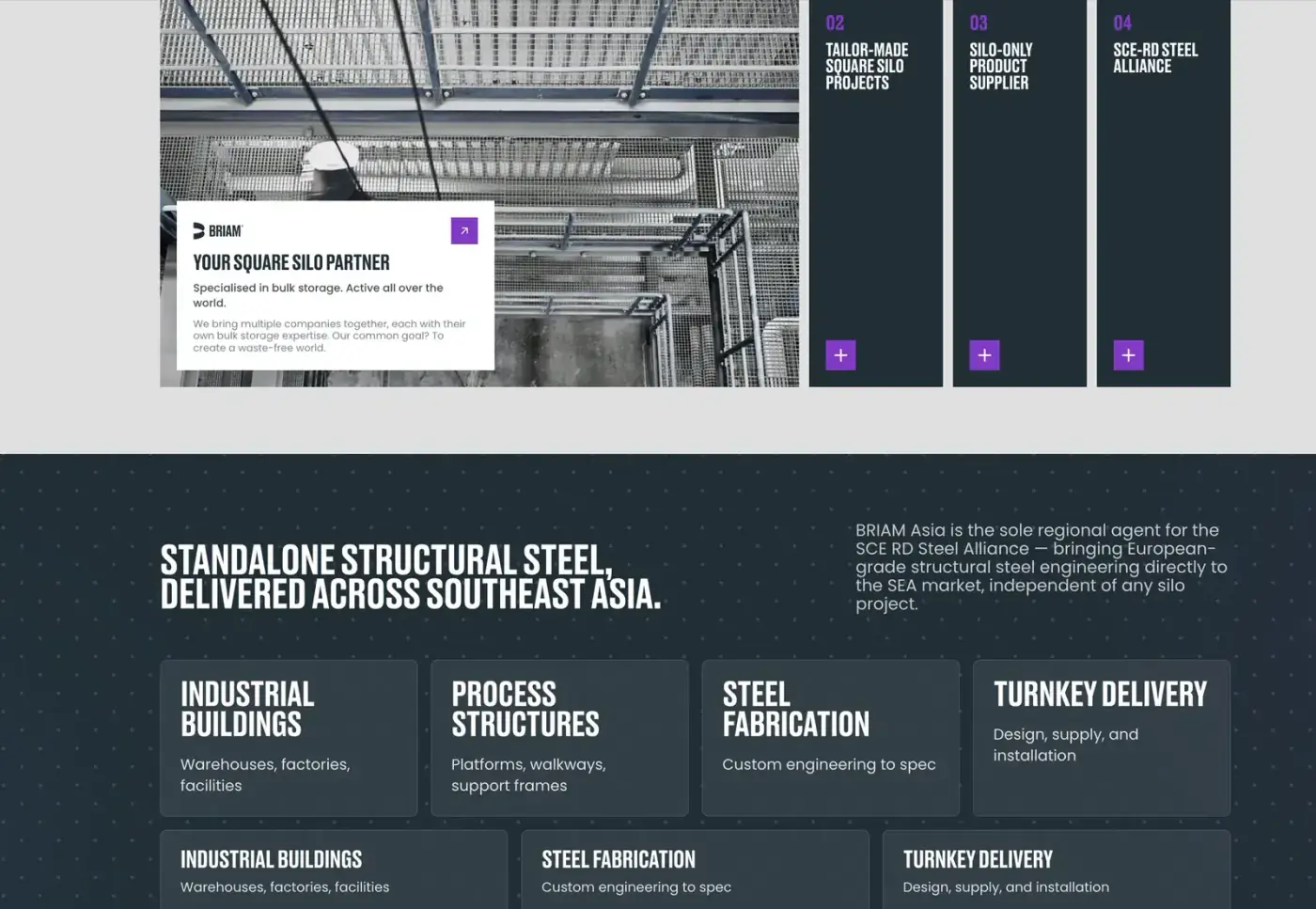
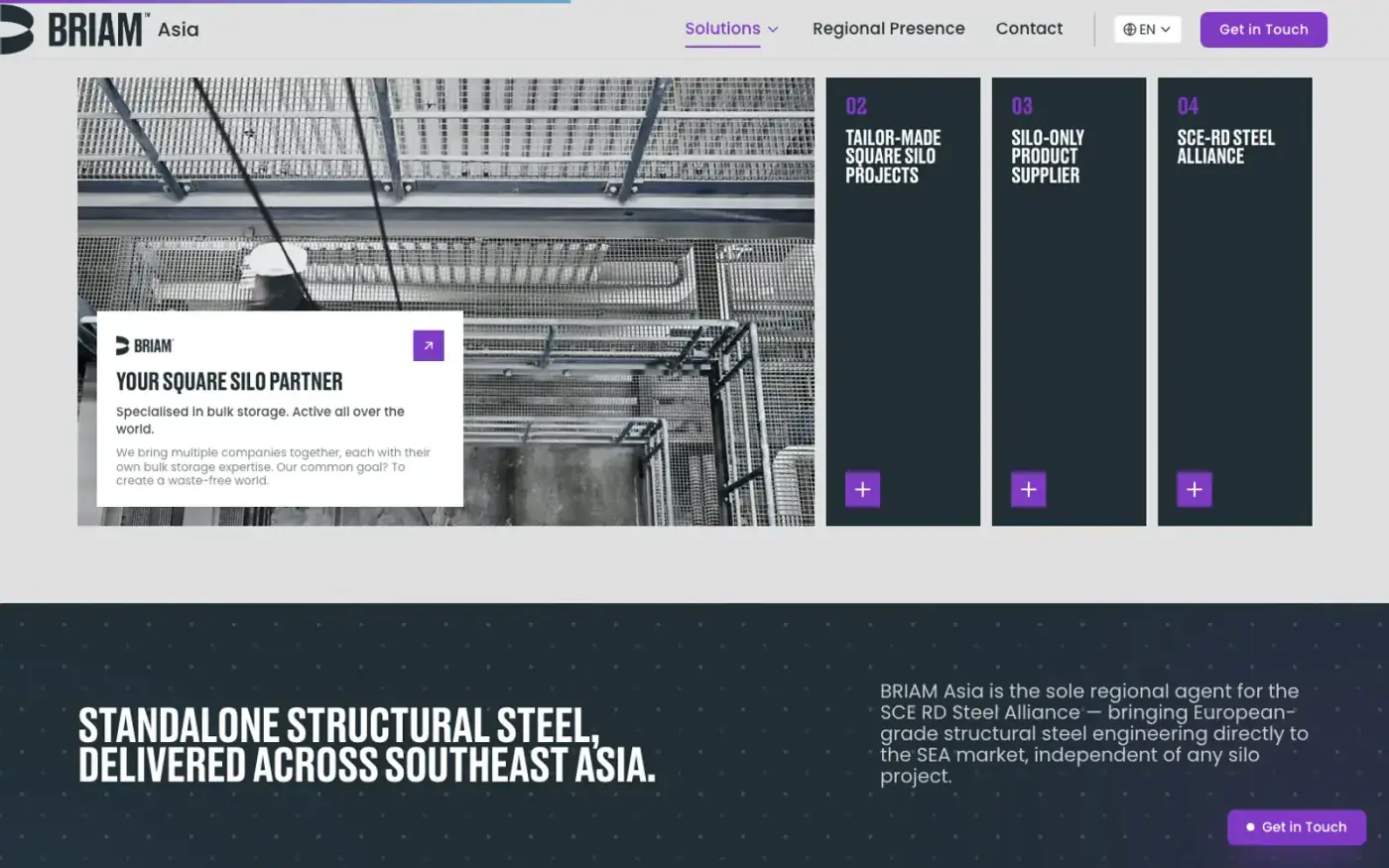
Structured the page so Silo Projects acts as a gateway (credibility + outbound links to BRIAM Group, SCE, Silbloxx) rather than competing for attention
-
Gave Standalone Steel Structures full native real estate; the only place on the site with a gated PDF download and dedicated lead form (Name, Company, Email, Country)
-
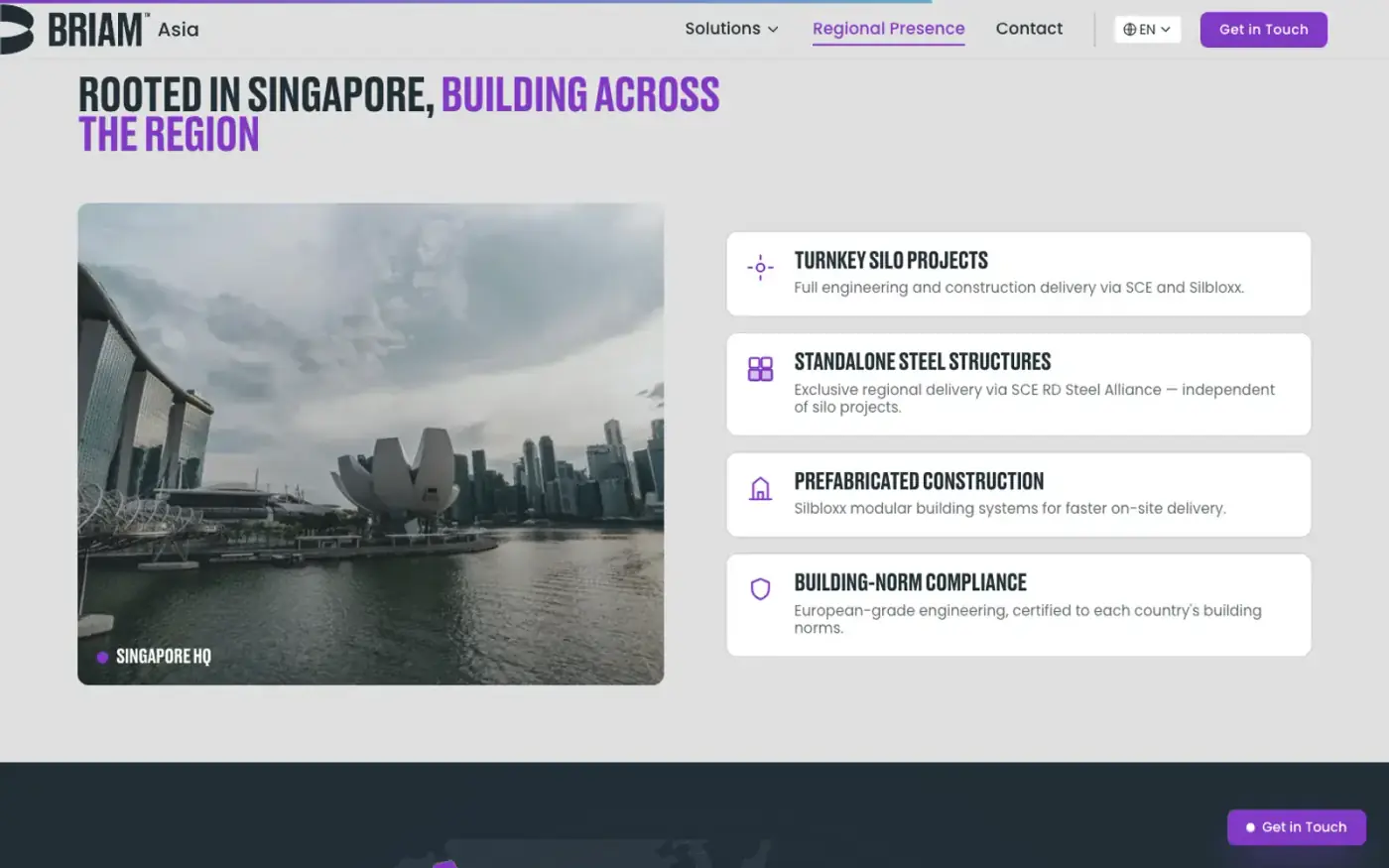
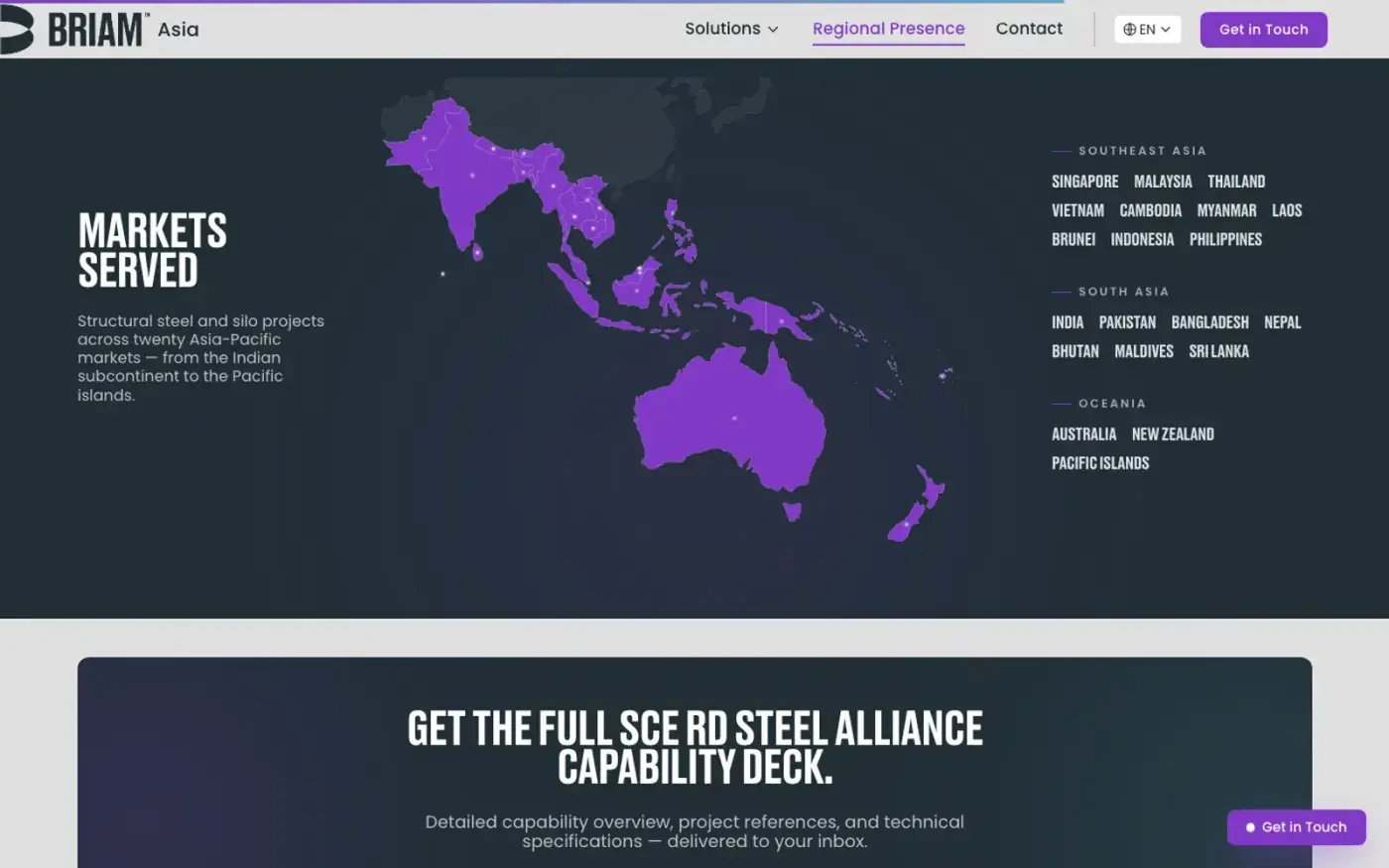
Regional Presence section built as a data-forward proof point: manufacturing footprint, countries served, delivery capabilities; positioning SEA clients as getting European manufacturing standards, not a regional offshoot
The Build
Design didn’t stop at handoff; I built the front end myself, component by component in Next.js and Tailwind, then wired it to Sanity CMS.
-
Broke every section into reusable React components, matching the design system’s spacing, type, and colour tokens 1:1 so there’s no drift between Figma and production
-
Wired each component to editable fields in Sanity; copy, images, and repeatable content blocks (project references, country lists, capability strips) are all CMS-managed, not hardcoded
-
Built out the multilingual structure across the component layer so EN/TH/VI/ID content swaps cleanly per locale, with translated content slotting into the same Sanity schema
-
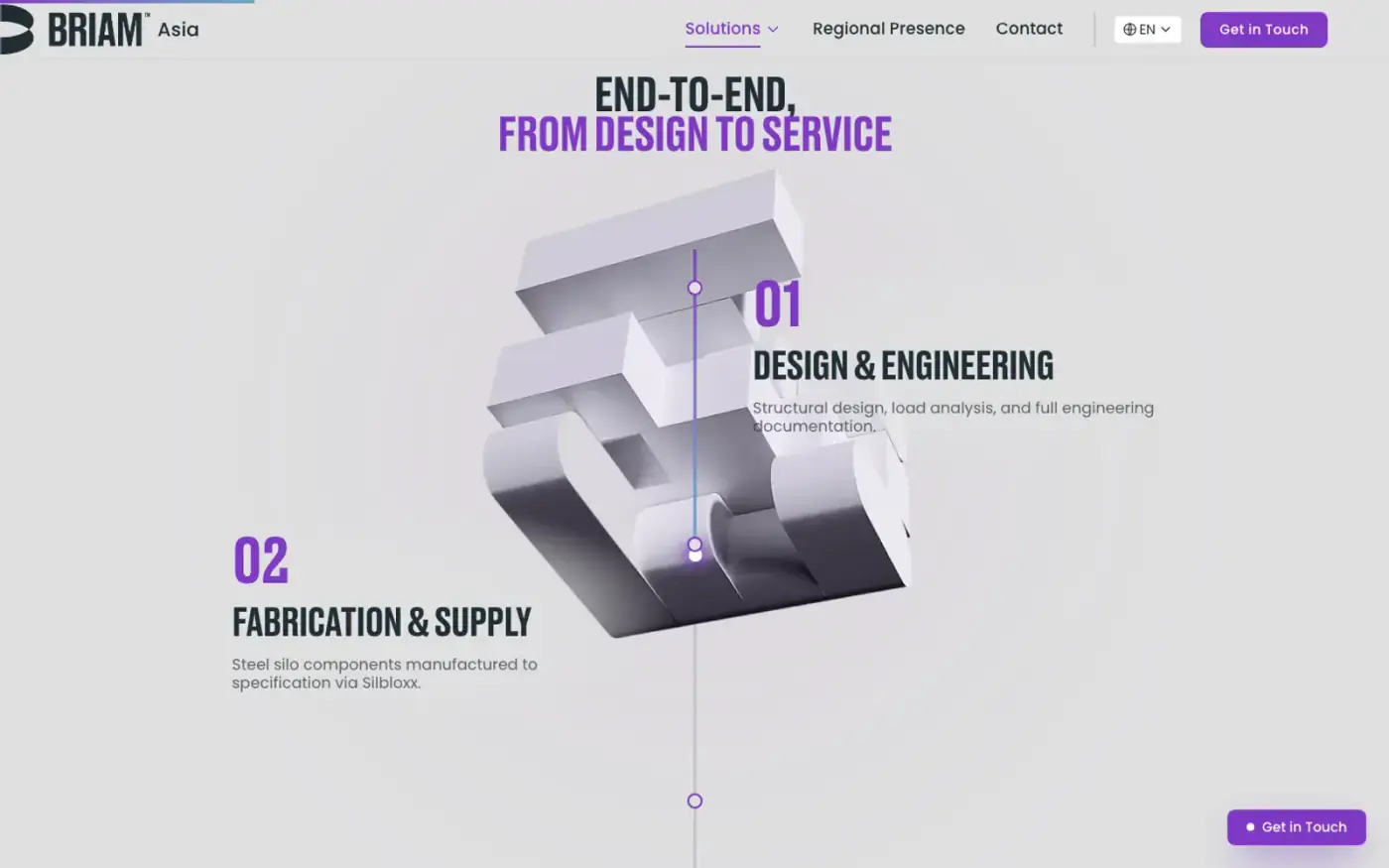
Implemented the smooth-scroll single-page navigation and locale switcher as functioning front-end behaviour, not just a prototype interaction
-
Structured the lead capture and gated-download components to hand off cleanly to the developer’s form-handling logic; inputs, validation states, and submit hooks built to spec, backend wiring out of scope
-
Handled responsive behaviour across mobile/tablet/desktop myself at the component level, including the map-left/content-right → stacked layout shift on the Regional Presence section
Key Features
-
Smooth-scroll single-page navigation with locale switcher (EN/TH/VI/ID), built and functioning in the front end
-
CMS-connected components: client can update copy, images, and repeatable blocks without touching code
-
Gated technical presentation download tied to lead capture form
-
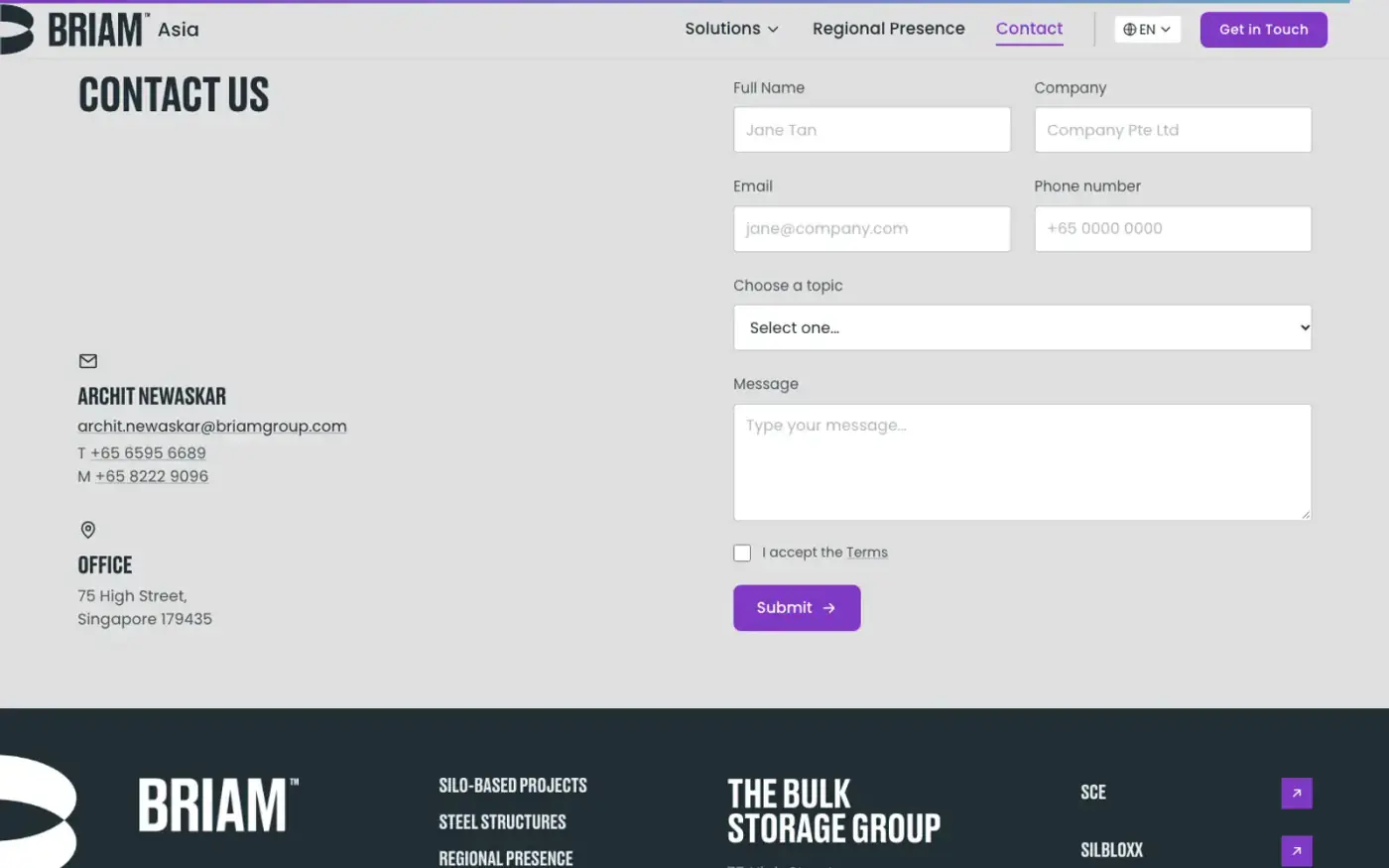
General enquiry form with Singapore office details
-
SEA-focused regional map: active vs. muted country states, no decorative globe
-
Outbound links to BRIAM Group, SCE, and Silbloxx open in new tabs, keeping the primary funnel intact
Outcome
Took this past the design deliverable: designed and hand-built the production front end, CMS-connected and multilingual, with BRIAM Asia’s regional exclusivity (SCE RD Steel Alliance) made structurally and visually impossible to miss.